So you're considering going freelance. Maybe you like the idea of working for yourself, or know somebody who's flourished since taking the leap. Or maybe you're worried about job security.
It's something nearly all creatives at least consider at some point in their career, but there's more to making it happen than just being a really good designer.
There are useful learning materials out there for getting started, but some of them are fairly-outdated and written with a bullish optimism that makes freelancing sound as easy as sending a few friendly emails to studios, and remembering to wear deodorant to the office of the client you've just booked in your first month. Perhaps it was in 2017, I wouldn't know.
2026 is a different beast. Algorithms seem unbreakable, the days of just sending a Vimeo link to your showreel are over, and there are hundreds of freelancers chasing the same booking.
But starting freelancing from scratch is still completely-doable, you just need the right approach, business skills and patience to make this work. Hopefully this overview helps!
Your Website
First and foremost, get your site ready. You can use Squarespace, Wix or an Adobe Portfolio to get something up and running over a weekend, and domains usually come with these providers. If you’re more confident with web design, I’d suggest moving onto Framer, Webflow or Wordpress for more customisation and better SEO.
Focus on having a showreel/portfolio being the first thing a viewer sees when landing onto your page. This can be a few thumbnails of your strongest work which click through to your work page.
Always use page headers or titles as H1 classes on the top of your page body. This is what informs Google what your site and it’s pages are about when it indexes them. Check out this guide here on how to use H classes on your pages.
When deciding on which work to show on your website, less is honestly more. Anything that doesn’t quite fit your highest standard should just be left out. It can be tempting to fill your site with as many projects as possible to please as many potential clients, but one lower-quality post can really weaken their first impression of your skill set.
Focus on this part with a usable website template first. Tweaking your site, adding fancy interactions and more pages comes after.
Even if you feel that your site isn’t 100% finished, publish it anyway. Websites are always a work in progress.
Whenever you post any work to LinkedIn, always try to include a CTA that encourages your audience to click on your website. It’s great for generating traffic.
Get your LinkedIn presence warmed up before you make the move to freelancing. Let people know who you are, what you do and show that you’re a friendly person to have around. Even if it’s liking posts or posting the odd snippet of work, you’ll be a familiar face by the time you start looking for work. Make sure that your profile photo, banners, skills, work history are all up to date to make the best first impression.
Start thinking about what niche you want to fit into. Designers get more recognition by doing well in one niche, rather than as a generalist. Niches are there to attract the industries you want to work with. You don’t have to get your niche finalised on the first day, but it’ll help guide what personal work you want to do and how you should start positioning yourself.
If you can’t think of anything to post on LinkedIn, or don’t have any recent work to show, you can always comment and just engage with people. They’ll appreciate you taking the time, and LinkedIn is for networking after all.
That being said, you’ll need to start connecting with and following people relating to the work you want to do. Creative Directors, Producers, Heads of Team and other freelancers are always worth connecting with. It’s not all about what you know, it’s also about who you know.
Personally, I’d avoid posting about controversial or political topics. You don’t want to polarise your audience when you’re just starting out. At the end of the day, you’re a service provider who should look as approachable as possible. Controversial posts can do big numbers on LinkedIn, but the authors tend to have more clout and a fine-tuned network to pull this off.
Portfolio Sites
I tend to use Behance, Dribbble and The Dots for portfolio sites. They all come in the first few results of Google searches for 'freelance Graphic Designer' or 'Graphic Designer in Manchester', and provide backlinks to your website (another SEO boost).
They're all great for finding inspiration, monitoring trends and connecting with other designers. I've very occassionally gotten gigs from Behance, but the algorithms have made discoverability more difficult without the 'pro' versions of these platforms. I remember posting all sorts of average work on there back in 2016 and getting decent traction and awards, it's now crickets.
In my opinion, without sounding too blackpilled, you have to be really good, or have worked with a major client or studio to get any engagement on there now.
If you post on these sites and don't see much engagement on your work, don't delete anything. The backlink is really useful, but the algorithm isn't.
Personally, I wouldn't bother with Instagram, unless you’re a content creator or trying to be an influencer. The algorithm isn’t geared to designers anymore, and not many clients come from there anyway.
Business coaches and courses
There are a lot of business coaches and communities for your specific industry. I've signed up with Build your Creative Business which is a community for freelance creatives. The community has a lot of useful learning materials and monthly check-in calls. I've heard decent things about other communities, it just depends on which one you resonate with most.
Prices for coaches and communities vary from £120-£800 per year, and sometimes give out free learning material. It’s always worth following them to get insights into the industry and any tips if you’re unsure about paying just yet.
If you’re willing to invest in a coach, they can give honest feedback on your portfolio and help steer you in the right direction on the business side of freelancing. It is what you’re paying them for afterall.
I would suggest to do some due diligence on a coach/community beforehand before paying for anything. Check out their reviews and who they actually are. If the coach is still actively in the field, or runs a studio, then they're probably a safe bet.
Finding your first gigs
It’s unlikely that you’ll have bookings within your first month, unless you’re in the right place at the right time. You can always set up an account with Fiverr and Upwork to get the ball rolling. The budgets can be questionable, there are some gems in there, and at least you’ll have some new work to add to your portfolio and valuable client experience. Having a profile on those platforms also comes up quite high in Google or ChatGPT searches, so you’ve got free visibility.
There are also a few tools you can use to get your first leads and figuring out who is who in your industry.
I’d recommend Hunter.io. It tells you about leads that aren’t always found on a Google search. Sometimes leads are right under your nose, and you get enough free credits to get the email addresses and LinkedIn profiles to build your CRM and start sending your first emails.
I’d recommend sending at least 5 emails a day if you’re not booked. Start with agencies and production companies by just introducing yourself and your work, and asking if they work with freelancers. If they respond, great. You can follow up and get a conversation started.
If you're ghosted, you can always reach out again in a few months with new work. Stay persistent, getting leads is a numbers game.
Try getting in contact with local agencies first, you immediately have a common ground, and they might want to meet you in person over coffee.
You can reverse search LinkedIn too for job posts. Say for example, you’re a Graphic Designer, you can search something like “freelance Graphic Designer” and filter it to ‘posts’ and click ‘most recent’, this can immediately refer you to LinkedIn users who are actively looking for a freelance Graphic Designer.
The key to using LinkedIn to find leads is to respond early and take a few minutes to look into their company. Some companies and job scopes aren’t always a match for your niche and skillset, so it’s not always worth the time to apply. Always look for an email address included if that’s how the job poster prefers to be contacted, it shows them that you’ve read the post and aren’t just spam-applying.
If they’re specifically asking you to share your website in the comments, great. This is even more exposure for your website.
People are quick to complain that this method doesn’t work, and it’s just engagement farming. Whilst it’s certainly more competitive, I can tell you that it does work if you’re patient.
If you can, consider getting a professional email address. Your emails are more likely to get read, and you’ll look like you’re more established as a freelancer. You can also connect your email to your domain, and authenticate it with DKIM DNS Record to make sure that those emails you send aren't ending up in Spam (high-recommend!).
Networking events
Hands-down the best way to network and introduce yourself to the scene. Although you might be working remote for most bookings, in-person connection is way more memorable than an email.
Try lookout for creative meetups, networking drinks and summits that overlap with your niche. Its important to keep conversation personable and not go in straight away with talking about your services. Just introduce what you do, get to know people and show people how approachable you are.
It's important to eithe bring business cards, or at least download your LinkedIn QR code to your phone for easy contact details. I normally keep a stack of business cards and add any new LinkedIn profiles to a CRM for follow-up after meeting someone in person.
Most of the time, exchanging a business card doesn't directly lead to your next booking, but these people are now part of your network. They might refer you to a role or keep you in mind when something comes up in future, or perhaps just want to get coffee if you're both in the same city.
Worst-case scenario with events, even if you end up with zero leads, or the event is a flop, you can just expensve the tickets on your tax terurn.
Your rate
Start with deciding your Day Rate. It’s based on your experience and where you are in the world. A Senior Graphic Designer in the UK should be around £350, whereas the same designer in the US should be $500-600. Different costs of living, whether your medical care is state-provided or private and taxes in your area define whether your day rate is profitable or not.
Going off of UK averages for a Graphic Designer, a midweight should be £250-£300, Senior £350-£500. If you’re seriously great, have years of experience and have a niche skillset, you can charge upwards of £1000.
But if you’re just starting, keep your day rate modest (but never undercharge), and increase your rate by 5% every 5 projects. You’ll catch up to the big leagues when clients know they can rely on you and send referrals your way.
SEO
Take SEO seriously. It’s not as technical as it sounds, and you can use Ahrefs for a quick site audit to see how you’re doing and where you can improve. An afternoon’s deep dive on headers, keywords and alt text for images can make a world of difference for your site’s rankings. SEO does take around six months to start showing results, so be patient!
Building up a presence on LinkedIn takes time, and not everyone enjoys posting regularly. SEO works for you in the background, so that clients can still find you without needing to post everyday.
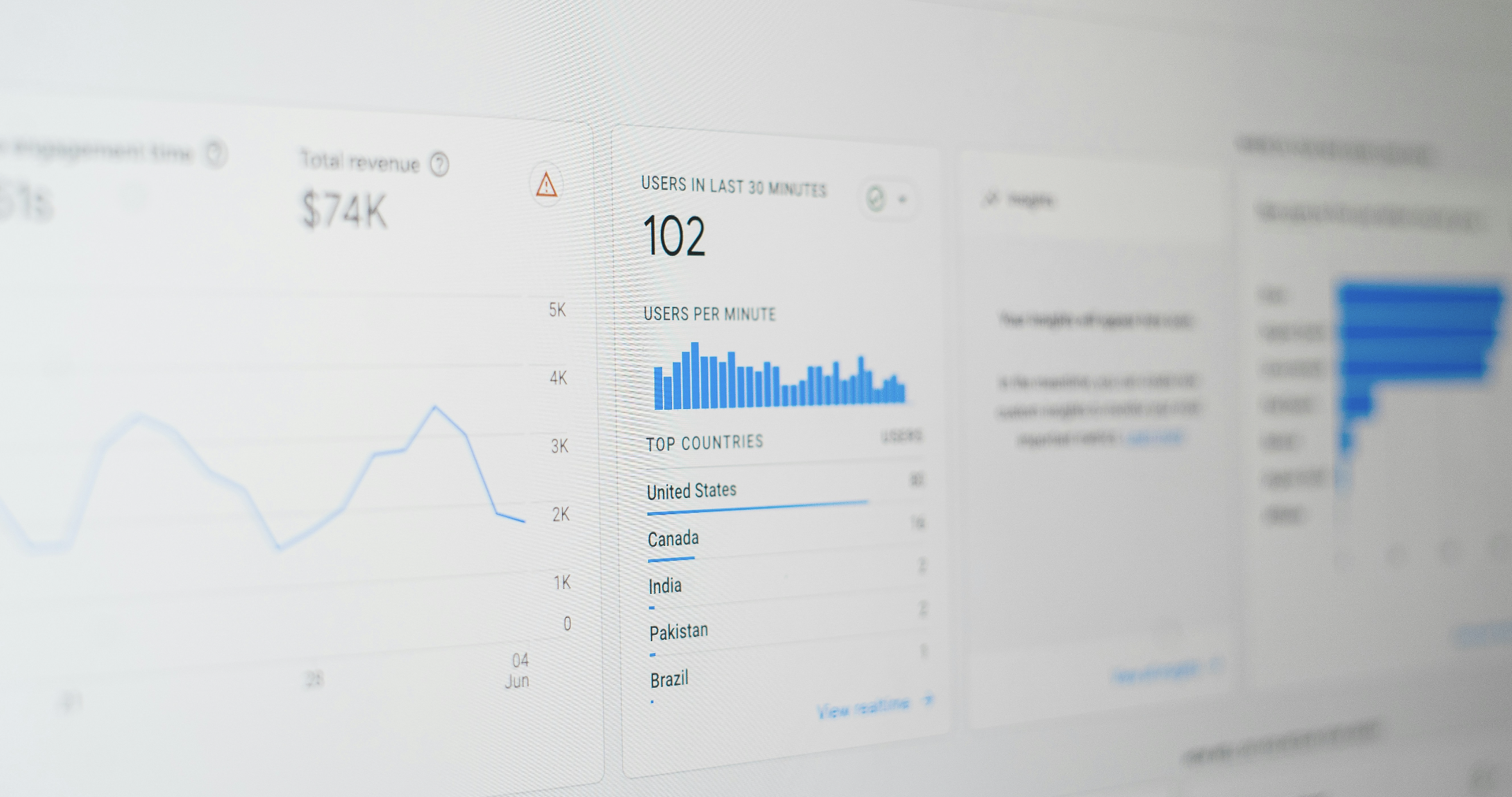
Make an account on Google Analytics and Google Search Console as soon as you can. You can link them to your website to get realtime overviews of your traffic, where it's coming from and what they engage with. These two tools can be a bit tedious to learn, but will help you out in the long-run. Any privacy policy that your website has should make it clear that you use Google Analytics to monitor activity, just to stay on the safe side.
I’d also recommend posting blogs or articles at least once a month. There's a reason why every agency has a Blogs/Insights page. You can find out about keywords and relevant topics on Google Keyword Planner, and write your content based around that. You can also Google reverse search something a client might search such as “freelance Graphic Designer in Manchester”. See what comes up and what Meta descriptions and titles are used, that’s usually a pretty good indicator of what will do well on Google.
Your written content doesn’t have to be the next New York Times column, but it does help with making sure your site has enough keywords for SEO.

Mindset
Some days at the beginning can be really tough, and telling yourself to keep keeping on can get exhausting. Just try to bear these pointers in mind to make way for better days.
Try not to be disappointed if your posts or messages don’t get much engagement at first, or if you’re finding yourself ghosted. It happens to pretty much every freelancer in their first year, even the more-successful ones. I’d be really surprised if an established freelancer didn’t ever feel invisible in their early days.
You may also start asking yourself what you're doing wrong, when comparing yourself to others who seem to be nailing it on socials, booked up for months on end and always get recommended first on job postings. They’ve probably had to struggle just as much as anyone to get where they are. Some people are just lucky and already have industry contacts from the get-go.
A note on that, try to look at those “I made £10k in one month” posts with a grain of salt. It’s a rarity and can take years of freelancing to get there. Most freelancers actually lose money in their first year. Coincidentally, 99% of these posts are also trying to sell you some sort of course.
Also on the topic of money, make sure that you have at least six months to a year’s savings ready. If you don’t, consider doing part-time work as a barista or store assistant to keep bills paid. You'll have a sense of purpose, and some cashflow if your first year is quiet.
Freelancing can also very lonely work. Most freelancers work remote, unless they're in a major city. You likely wont have the cashflow either for a shared office space in your first year. You can also go weeks feeling invisible, or like you’re being ignored. You need to be comfortable in your own company, or have a close-by group of friends/family for when this hits.
If you're patient and stick at it, the payoff and the freedom to work for yourself is worth the wait. You don't need the best portfolio or client list to make it work, it's strategy, value to clients and business skills do most of the heavy lifting. Afterall, a great portfolio is only great if it's visible to the right people.
If you have any questions or need more detail on a certain topic, feel free to reach out at hey@jemmaybank.com