Background on The Thing
I’ve always been fascinated by The Thing, a secret listening device invented by Leon Theremin during World War II. Whilst it looks like a microphone, it’s actually an endovibrator. Theremin himself was one of the sharpest minds of the former Soviet Union. Whilst he’s more-known for inventing the Theremin whilst living in the US, I’ve taken more of a shine to his contributions to espionage technology.
At the time The Thing was invented, The Soviet Union and the US had an alliance founded on their efforts to defeat the Axis powers during the war. It was an alliance that didn’t last long, and riddled with espionage from both sides from the start.
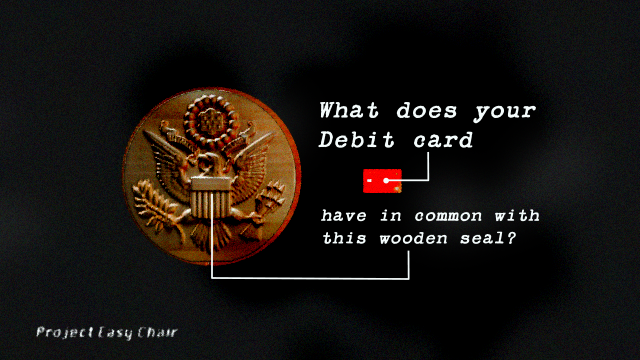
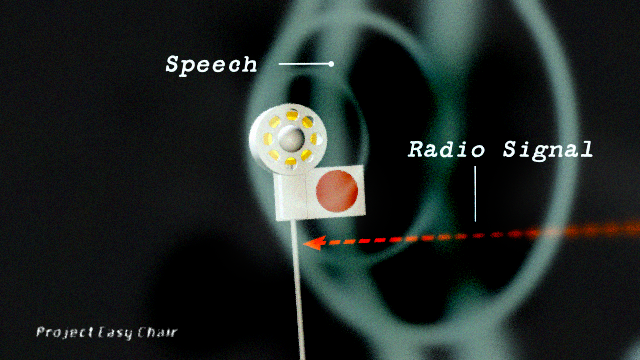
The Thing was hidden inside a carved wooden replica of the US Great Seal, and presented to ambassador at the time, Averell Harriman as a gesture of friendship between the US and the Soviet Union. The seal was hung in the embassy study, and remained undetected for seven years. The device consisted of a tiny capacity membrane connected to a quarter-wavelength antenna, it had no in-built power supply or wires.
The device was near-impossible to detect with routine counter surveillance sweeps, as it could only produce signals when activated with radio signal of the correct frequency by an external transmitter.
The Thing was accidentally discovered when a radio operator at the British Embassy happened to come across American conversations on an open Soviet Air Force radio channel as the Soviets were beaming radio waves at the ambassador's office. Because it did’t need a power supply, there’s a high chance that The Thing would still be working today if it hadn’t been discovered.
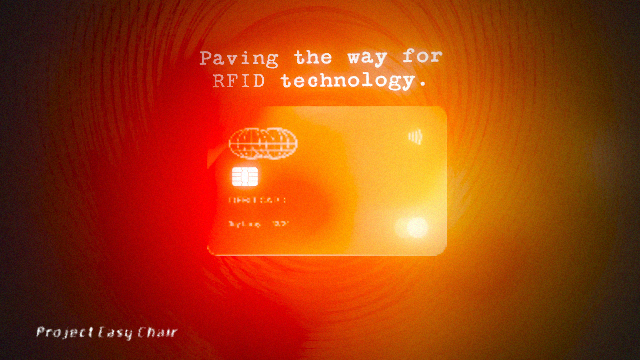
With The Thing being a passive device, only activating from external electromagnetic sources, it’s considered a predecessor to RFID technology. Like the chip in your debit card.
Making a Motion Graphics Explainer
The story of The Thing and how it worked are fairly complex, and can only be appreciated when knowing the context of its hiding place. The idea behind making it into an explainer video was to simplify the story and make it more engaging to someone who’s never heard of The Thing, or has no interest in radio technology.
Capturing Attention
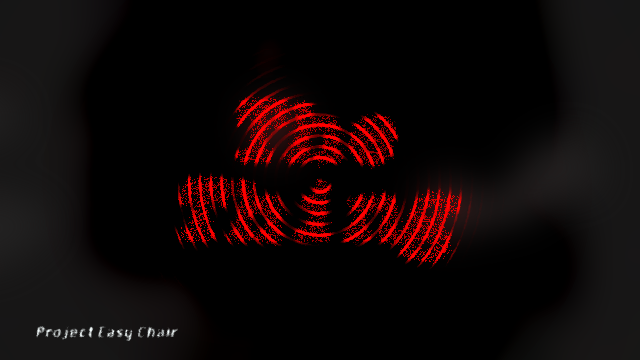
I decided to make The Thing’s story into something more cinematic, inspired by psychological thrillers and documentaries. The soundscape of the animation was designed to be intentionally eerie and to complement the fast, jittery motion of typewriter-inspired text and unnerving colour palette of the animation.
Most people won’t be interested in watching a video on radio technology, so I decided to start the animation with an unnerving title sequence and hook. More viewers would be curious to find out the connection between the seal of the US and their debit card than how an endovibrator works.
Making the message more memorable
The animation isn’t designed to turn viewers into experts on Soviet-era espionage, but should capture their attention for long enough to consider digging deeper on how The Thing worked, or at least impart them with a bit of pre-Cold War history.
Whilst I could have spent more of the animation explaining the inner-working of the device with 3D visuals, it’s not something most viewers are interested in or will remember. The animation was designed to be a easier to process as quick overview and give a sense of mystery to a subject they’ve never considered reading about.
Increasing Engagement
Explainer videos, whether made for a product or event can demonstrate something fairly complex through storytelling and visuals. Explainer videos can do a great job of demonstrating how something works with little cognitive load of the viewers.
A viewer is more likely to spend time engaging with your content when presented as a video rather than a block of text. If it’s not something they’re immediately interested in, chances are that they’ll skim a few words and move on - too much cognitive load. An animation has the ability to frame something as being interesting within the first 3 seconds without asking too much of the viewer.
Demystifying with Motion
Whilst there are plenty of photos and diagrams of The Thing, I decided that Motion would be the best way to visualise it. I decided to use photographs and diagrams as only supplementary parts of the animation, relying on 3D models which I’d made on Blender to give the best overview on the subject.
The objects which I’d modelled aren’t the most visually engaging, a debit card, a small device and a wooden seal. But when combined with dramatic lighting, kinetic text and a soundscape, they all contribute in their own way to setting up the tone of mystery and the ‘Ah-ha’ moment when the viewer understands how they’re all connected.
Final thoughts
I set out the make the animation educational and purposeful, instead of just decorative content. It’s designed to introduce viewers to a more-forgotten part of modern history without looking like a dull physics video. Motion Design does the job of getting this across by presenting The Thing as a story about espionage and mystery.
Viewers might not leave with a better understanding of radio waves, the purpose of the animation was to create an impression that a small device from the 40’s can leave on someone when shown under the right light.